Forest restoration is one of the most powerful tools we have to protect wildlife. When forests recover, they provide food, shelter, and safe passage for animals that once disappeared from the region. At Proyecto Tití, we celebrate every new tree planted and every forest corridor reconnected—because each one brings the tropical dry forest back to life. And something remarkable happens when forests return: wildlife returns too.
In the Montes de María region, restoration and connectivity efforts are helping rebuild ecosystems that were fragmented for decades. As these forests regenerate, they are once again supporting healthy populations of native species—from small mammals and birds to larger animals that play a critical role in maintaining balance in the ecosystem.
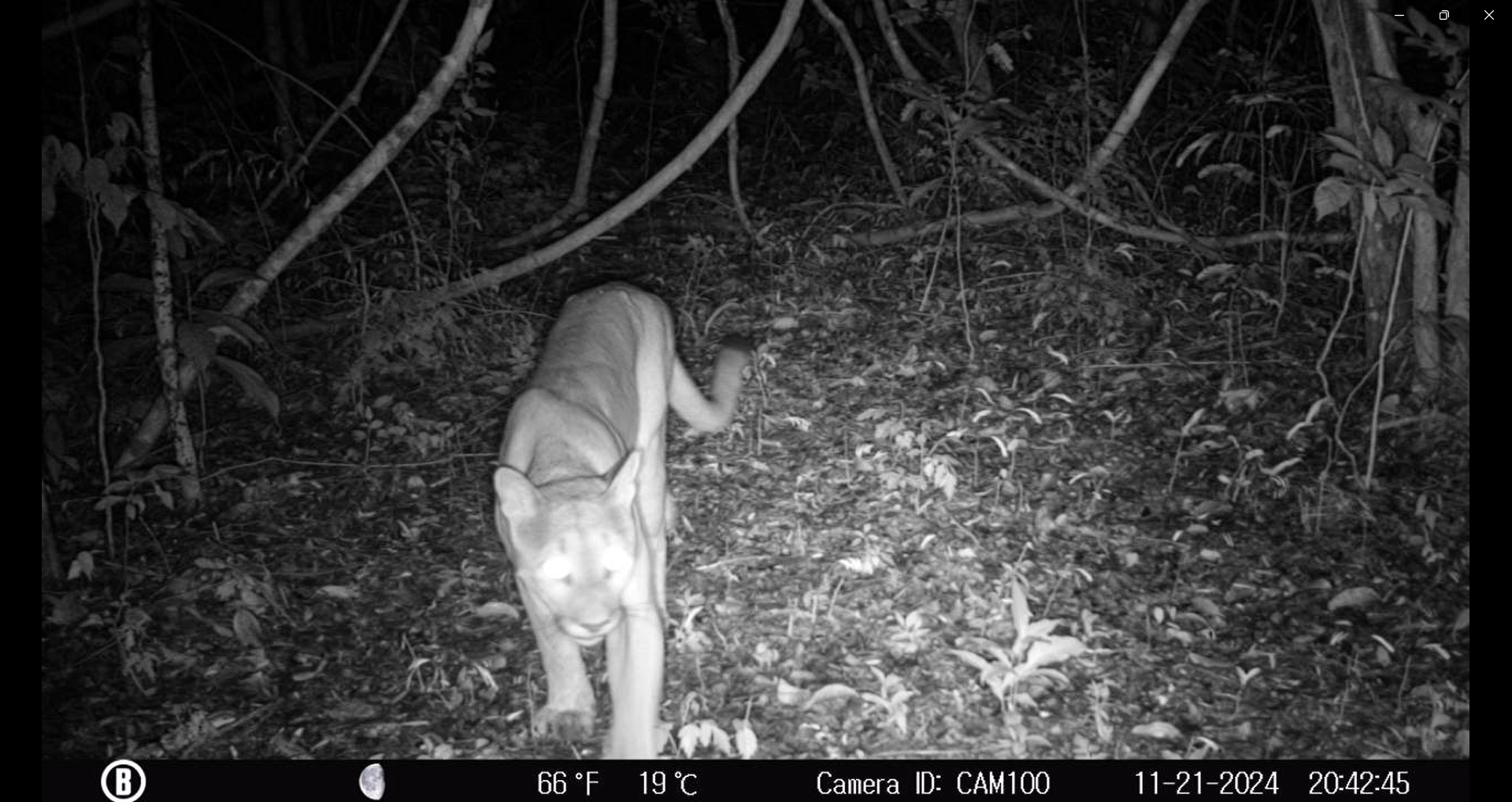
One of the most important signs of ecosystem recovery is the return of apex predators like the puma. These animals are essential for healthy forests because they regulate prey populations and help maintain ecological stability. Their presence is a sign that nature is healing. But their return also brings new challenges—especially for the rural families who live and work along the forest edge.
A Challenge at the Forest’s Edge
During the last year, communities reported an increase in attacks on domestic animals, including poultry, dogs, and even larger livestock such as mules. For many campesino families, these animals represent not only economic stability, but daily survival. When a predator takes livestock, the loss can be devastating.
Historically, when people feel unprotected or unsure of what to do, retaliation can seem like the only option. Unfortunately, this creates a dangerous cycle: predators are killed, ecosystems weaken, and conflict continues. Rather than accepting this as inevitable, Proyecto Tití and local partners took a different approach—one rooted in collaboration, science, and practical solutions.
Technology Meets Creativity: A New Path Forward
The good news is that conflict is not permanent. With the right tools, predators can be discouraged without harming them—and livestock can be protected in ways that are affordable, effective, and sustainable.
Through a pilot initiative, we worked with local families to implement a set of innovative deterrent strategies on farms located in areas of high conflict. These included:
Solar-powered electric fencing, designed to deter predators without causing injury
High-powered LED reflectors, capable of illuminating open pasture areas up to one kilometer
Reinforced nighttime enclosures, offering secure shelter for poultry and vulnerable animals
Improved pasture layout, reducing easy access from forest edges
Enhanced water sources, decreasing competition between livestock and wildlife
This combination of measures has proven especially promising because it focuses on prevention—keeping predators away from “easy opportunities” and helping livestock owners feel confident and prepared.
Education Builds Long-Term Solutions
Technology alone is not enough. True coexistence depends on knowledge, trust, and community leadership. That’s why education became a core part of the program. Proyecto Tití supported seven participatory workshops in rural communities. These workshops helped families better understand the biology and behavior of native felines such as the puma, ocelot, and jaguarundi.
Together, we explored practical strategies for reducing predation risk—such as keeping livestock closer to home at night, strengthening enclosures, and improving herd management. We also strengthened community networks so neighbors could share information, monitor predator activity, and respond proactively.
Science in the Service of Coexistence
From the very beginning, we knew that lasting solutions had to be grounded in science. So alongside the work on farms and in communities, we began listening closely to the landscape itself. Using spatial mapping tools, we identified the areas where livestock and wildlife most often overlap—those sensitive edges where forest and farmland meet. Camera traps quietly placed along trails and forest corridors revealed who was truly moving through these recovering habitats. At the same time, conversations with livestock owners helped us understand not just where conflict was happening, but how it was being experienced—what families feared, what they needed, and what solutions felt realistic.
Together, the data told a powerful story: as forests recover, prey species are increasing—and predator populations are becoming healthier. This is exactly what we hope to see in a thriving ecosystem. But it also reminds us that as nature rebounds, human practices must adapt alongside it.
Real Results, Real Hope
Today, that adaptation is already underway. Across 21 pilot farms in priority areas, families have implemented preventive measures that make their livestock safer and their farms more resilient. More than 140 community members have participated in workshops and conversations about coexistence, strengthening local knowledge and shared responsibility. Mapping efforts have helped us pinpoint the most sensitive areas, allowing solutions to be focused where they are needed most.
Monitoring efforts are also showing encouraging signs. Camera traps have documented dozens of records of native felines and hundreds of prey species—clear evidence that biodiversity is returning. At the same time, communities are increasingly expressing their commitment to avoiding retaliatory hunting and choosing prevention instead.
Perhaps most importantly, something less visible—but deeply meaningful—is changing. Families are beginning to see that predators do not have to be enemies. With the right tools, knowledge, and support, they can remain part of a healthy forest system—while livelihoods remain protected. That shift in perspective may be the most powerful result of all.
Restoration Means Learning to Share the Landscape
At Proyecto Tití, we often say that conservation is not only about protecting wildlife—it is about supporting the people who live alongside it. As our forest conservation program continues to protect existing forests, connect fragments, and restore habitat to create more forests, we know we will continue to see more wildlife return. That is a sign of success.
And success brings responsibility. The return of the puma reminds us that restoring forests is not just planting trees—it is rebuilding relationships between nature and people. It is creating landscapes where wildlife thrives and communities feel secure.
Thanks to technology, creativity, and the dedication of campesino families, we are proving that coexistence is possible. The future of the Montes de María can be one where forests flourish, livestock is protected, and predators remain wild—right where they belong. Because when forests return, life returns. And together, we can make sure that return becomes a story of hope.